Advanced UAV Systems Training (ArduPilot)
Take your drone expertise beyond flying. This intensive 10-day program covers advanced UAV architecture, ArduPilot flight controllers, Mission Planner, QGroundControl, MAVLink, PID tuning, autonomous missions, Lua scripting, companion computers and Python-based drone control.
It ends with a capstone project where you integrate a complete UAV system and validate it in a test flight or in SITL simulation.
- 10-day program
- ArduPilot
- Mission Planner
- QGroundControl
- PID tuning
- MAVLink
- Autonomous missions
- Lua scripting
- Python
- Companion computers
- ROS / ROS2
- Capstone project
- Duration
- 10 days
- Format
- Theory and hands-on lab
- Eligibility
- Intermediate. Basic assembly or equivalent experience
- Outcome
- Integrate, tune and fly an advanced UAV system
Who is this course for?
- Engineering students and graduates in electronics, mechanical or computer science
- Drone technicians who have completed basic assembly or have equivalent experience
- Developers moving into autonomy, robotics and UAV software
- Startups building custom survey, agri or inspection drones
What will you be able to do?
- Understand the architecture of an advanced UAV system
- Configure and operate open-source flight-controller systems
- Install and configure ArduPilot firmware
- Wire and configure flight-controller peripherals
- Use Mission Planner, QGroundControl and MAVProxy
- Establish wired and wireless telemetry links
- Perform flight-controller calibration
- Configure advanced ArduPilot parameters
- Perform supervised PID tuning and AutoTune
- Analyse flight logs for tuning and diagnostics
- Understand UAV communication protocols
- Configure autonomous missions and safety systems
- Develop basic ArduPilot Lua scripts
- Integrate companion computers with UAV systems
- Use Python-based UAV APIs for basic autonomous control
- Understand the fundamentals of ROS/ROS2 integration
- Complete an end-to-end UAV integration project
What is in the syllabus?
- 01
UAV systems and the open-source ecosystem
How an advanced aircraft is built, and the open-source stack you will use for the rest of the program.
- UAV architecture
- Flight controller systems
- Sensors and propulsion
- ArduPilot vs PX4
- Ground control stations
- Introduction to MAVLink
- Mission Planner installation
- SITL simulation
- 02
Flight controller hardware and firmware
Open a Pixhawk-family controller, wire it, and get ArduPilot firmware onto the board.
- Flight controller architecture
- Pixhawk-family hardware
- FC, ESC, GPS and RC wiring
- UART, I²C, SPI and CAN interfaces
- ArduPilot firmware
- Firmware flashing
- Bootloader and DFU recovery
- Hardware verification
- 03
Mission Planner and ground control
Set up the ground station and connect to the aircraft over USB, radio and network links.
- Mission Planner installation
- QGroundControl
- MAVProxy
- Windows, Linux and Android environments
- USB telemetry
- SiK radio telemetry
- UDP and TCP telemetry
- Ground station comparison
- 04
Calibration and parameter configuration
Bring a new airframe to a safe first setup, from sensors and radio through to failsafes.
- Initial setup
- Accelerometer calibration
- Compass calibration
- Radio calibration
- ESC calibration
- Flight-mode configuration
- Parameter tree
- Parameter files
- Failsafe configuration
- 05
Advanced PID tuning
Tune how the aircraft responds, then read the logs to prove the change.
- PID control fundamentals
- Rate and attitude controllers
- AutoTune
- Manual PID tuning
- Flight-log analysis
- Vibration analysis
- Harmonic notch filtering
- Tuning documentation
- 06
Drone communication protocols
The links between the flight controller, sensors, motors and the radio.
- MAVLink messages and routing
- UART, I²C and SPI
- CAN and DroneCAN
- PWM and DShot
- SBUS, CRSF and ELRS fundamentals
- 07
Autonomous flight and safety systems
Plan missions the aircraft can fly on its own, and the failsafes that bring it home.
- Waypoint mission planning
- Survey and grid missions
- Geofencing and return to launch
- Battery, radio and ground-station failsafes
- EKF and GPS failsafe
- Camera and gimbal control
- Precision landing fundamentals
- Introduction to multi-vehicle concepts
- 08
Lua scripting
Write small scripts that run on the flight controller and change how the aircraft behaves.
- ArduPilot scripting engine
- Lua fundamentals
- Vehicle-state access
- Parameter control
- RC and GPIO interfaces
- Custom failsafe logic
- Script deployment and debugging
- Custom autonomous behaviour
- 09
Companion computers and drone software
Put a computer on the aircraft and talk to the flight controller from Python and ROS.
- Raspberry Pi and Jetson integration
- MAVLink bridge
- Python drone control with pymavlink
- MAVSDK and DroneKit concepts
- ROS and ROS2 integration
- MAVROS and DDS
- Computer vision fundamentals
- Vision-assisted landing
- 10
Capstone project and assessment
Bring the full system together and prove it in a test flight or in SITL.
- Complete UAV system integration
- Parameter and tuning review
- Mission configuration
- Lua scripting
- Companion-computer integration
- Test flight or SITL validation
Where is the training held?
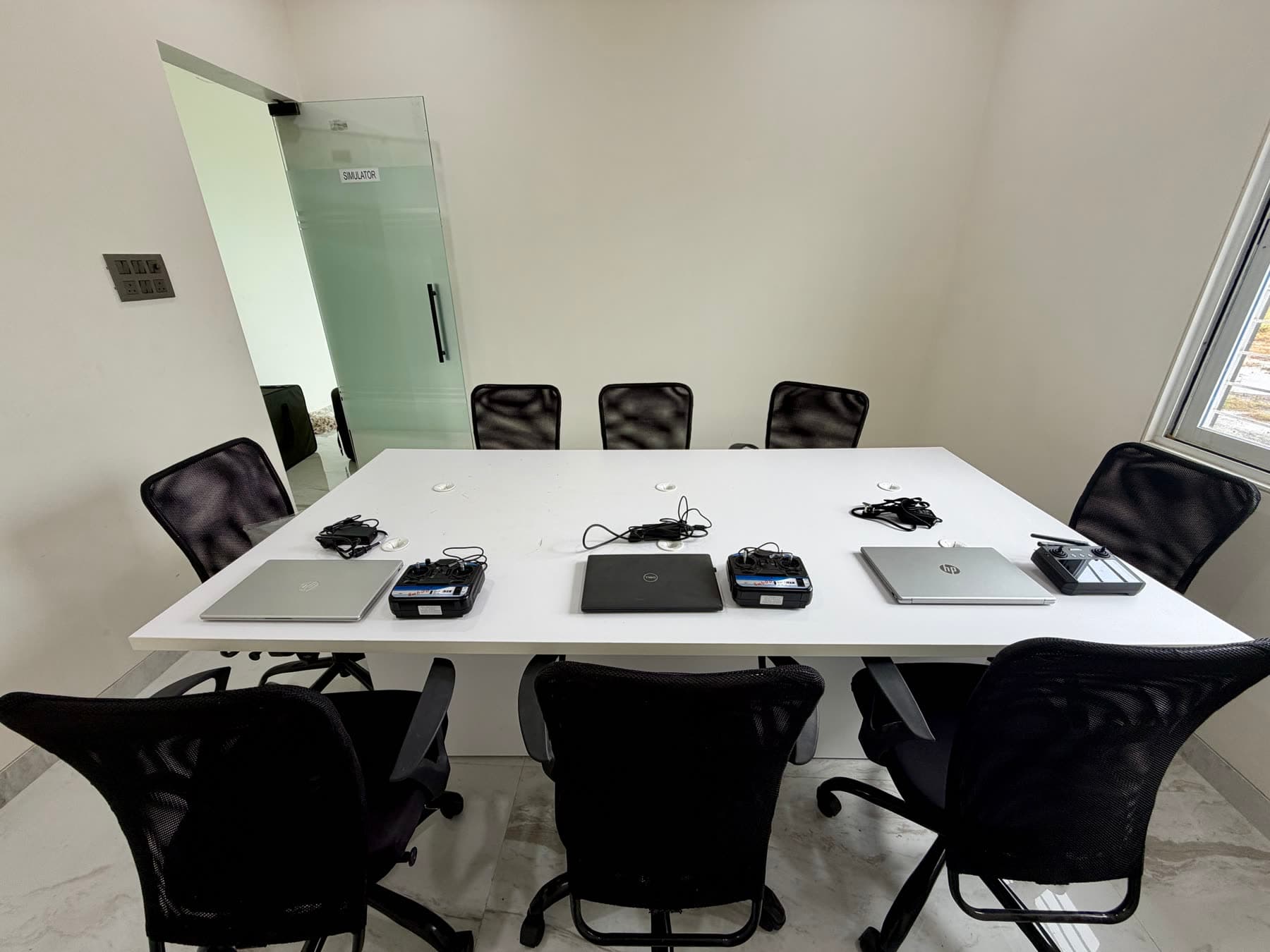
Classes, the simulator lab and the flying field are at our campus in Karjat, Maharashtra 410201. Karjat is on the rail corridor between Mumbai and Pune, so students from Mumbai, Navi Mumbai and Pune can reach us. Read how to reach Dronera Aviation in Karjat or contact admissions for the exact location.